ABOUT JOE
I didn’t set out to become a resilience speaker.
Honestly, for most of my life, I never thought much about resilience at all.
I spent 4 years as a police officer and 12 years as a firefighter. I survived an active shooter incident with bullets literally flying over my head. I led crews into burning buildings. I worked pediatric codes, horrific accidents, and more chaos than I could possibly remember.
And I was fine.
More importantly, I was happy.
I was married to my high school sweetheart. I loved my career. We had 2 beautiful kids who were thriving at school and at home. I was ambitious, healthy, excited about life, and genuinely thought I had an incredible marriage and family.
I didn’t secretly know something was wrong.
I thought everything was right.
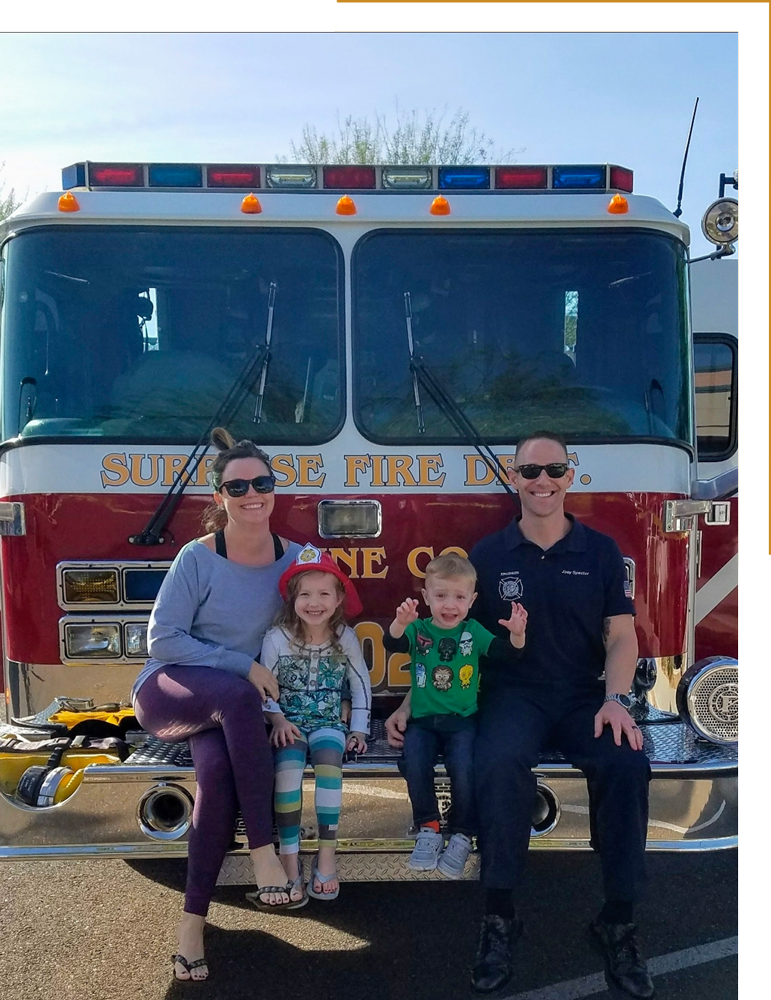
Why would I think about emotional fitness? Everything was working.
I didn’t spend much time examining my emotions or know much about nervous-system regulation. I knew how to work hard, solve problems, take care of people, and push through discomfort.
And for a long time, that worked incredibly well.
Until it didn’t.
Then life came at us all at once.
Over about a year and a half, I suffered a permanent brain injury that ended the career I loved.
My best friend died by suicide.
My dog and grandmother died within the same week.
My wife lost both of her parents and her grandparents.
My mom developed dementia.
I went from earning my full salary to suddenly living on a pension that was 50% of what I had been making, and we came frighteningly close to losing our home.
And while all of that was happening, the family I thought could handle anything started falling apart.
My wife began drinking.
We fought constantly.
Our kids fell apart. Anxiety, panic attacks, and emotional dysregulation became part of our lives.
I became deeply depressed, disconnected, and increasingly dissociated from what was happening around me.
And I kept doing the one thing I had always been good at.
I pushed harder.
Until pushing almost killed me.
One day, sitting alone in my truck, I put my gun in my mouth with my finger on the trigger. I started applying pressure.
I was millimeters away from killing myself.
I got the gun out of my mouth, and for a moment, I was totally disoriented, and it felt like the gun was the enemy. I threw it in my glove box and launched myself out of my truck because I couldn’t get away from it fast enough.
I ended up in the parking lot, crying, praying, and throwing up.
It was the worst moment of my life. And, as strange as it sounds, it’s also the moment I’m most grateful for, because it was the moment I realized that my family and I were at rock bottom, and we needed help.
I wasn’t missing toughness.
I had plenty of toughness.
What I didn’t have were skills for the kinds of problems you can’t muscle your way through.
I didn’t know how to regulate myself when my nervous system was overwhelmed.
I didn’t know how to move through grief instead of burying it.
I didn’t know how to resolve conflict peacefully when the bills were piling up and everyone in the house was exhausted.
I didn’t know how to sit with somebody I loved when they were hurting without trying to fix them.
And the truth is, nobody in my house knew how to do those things.
My wife and kids were struggling in their own ways, and we were all reacting to one another without understanding much of what was happening underneath it.
Nobody had ever taught our family how to do this.
So we learned. The hard way.
My wife got help.
Our kids went into intensive therapy.
I spent years in therapy and trauma treatment, including talk therapy, EMDR, ketamine therapy, and a whole lot of work I never imagined I would be doing.
We started learning about emotions, communication, nervous systems, mindfulness, conflict, empathy, gratitude, and what resilience actually looks like when life isn’t cooperating.
And sadly, my family suffered a lot because I wasn’t equipped to help lead us through that season. That is one of the hardest truths for me to sit with, and one of the biggest reasons I keep practicing these skills and teaching them to others.
We didn’t just survive.
My marriage became stronger than I knew a marriage could be.
We learned to communicate with honesty and empathy instead of constantly reacting to each other.
Our kids became resilient as hell. They understand their emotions, know how to regulate themselves, and sometimes help their friends do things I didn’t know how to do as a grown man.
We experience more gratitude, connection, and joy than I knew were possible before everything fell apart.
Life didn’t magically get easy. We got radically better at living it.
That changed the way I look at resilience.
We learn how to do our jobs.
We learn how to manage money.
We train to drive, lead, fight fires, shoot, build things, run companies, coach teams, raise kids.
But most of us are never intentionally taught how to manage our own emotions, communicate when we’re overwhelmed, handle conflict, support somebody who’s hurting, or stay present enough to enjoy the life we’re working so hard to build.
I certainly wasn’t.
I wish I had learned those things before life forced me to.
Where the expertise comes in
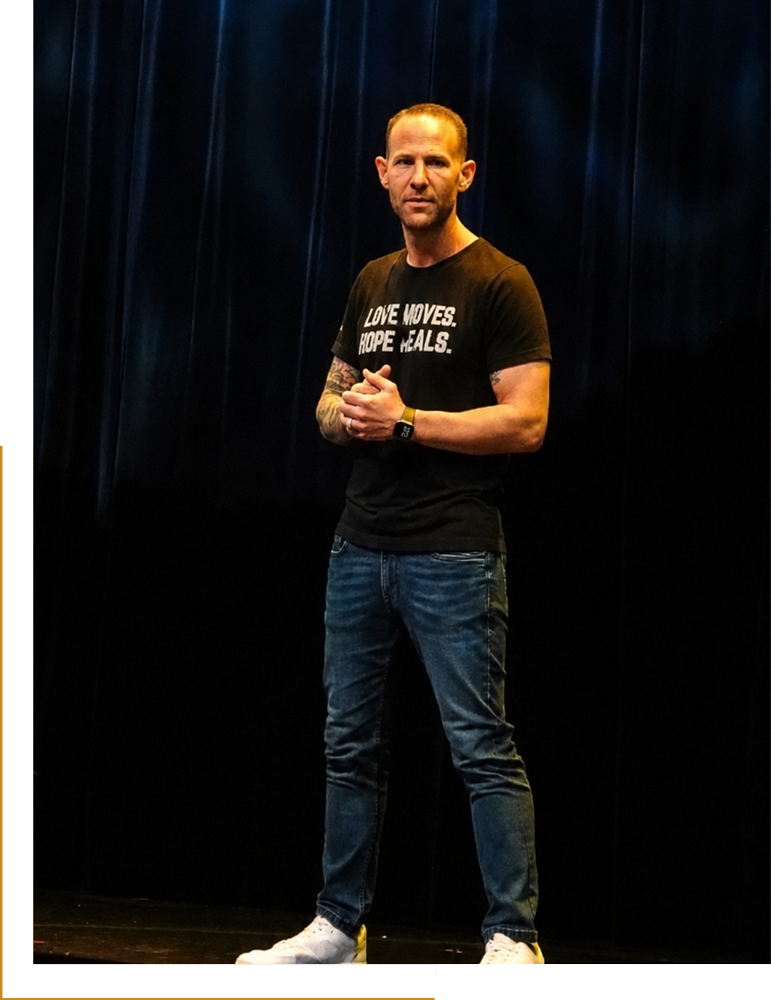
My lived experience gets people to listen. But it isn’t the only thing I bring into the room.
Public safety has been my world for nearly 25 years. I spent 16 of those years wearing a badge or working in the fire service, and for nearly a decade I’ve been back inside firehouses, police departments, conferences, and leadership rooms teaching resilience and emotional fitness.
Today I also serve as Director of Public Safety Partnerships at Kadelyx Ketamine Therapy, working alongside a clinical team to help connect public safety professionals with effective mental-health care.
I have a bachelor’s degree in psychology.
I’ve now taught these skills to more than 1,000 public safety professionals and delivered more than 200 paid speaking and training engagements.
The work has been tested with firefighters, police officers, chiefs, peer support teams, construction professionals, leadership groups, and conference audiences.
What I’ve learned is that complicated psychology becomes a hell of a lot more useful when somebody explains it like a normal person.
That’s what I try to do.
I’m still a work in progress too.
I don’t teach this stuff because I’ve achieved some perfect state of emotional enlightenment.
That sounds exhausting.
I still get pissed off.
I still have bad days.
I still have to practice the same skills I teach.
And so does my family.
The difference now is that we’ve built emotional fitness. We have the awareness and tools to move through hard shit without taking it out on ourselves or each other, repair when we get it wrong, and actually be present when life is good.